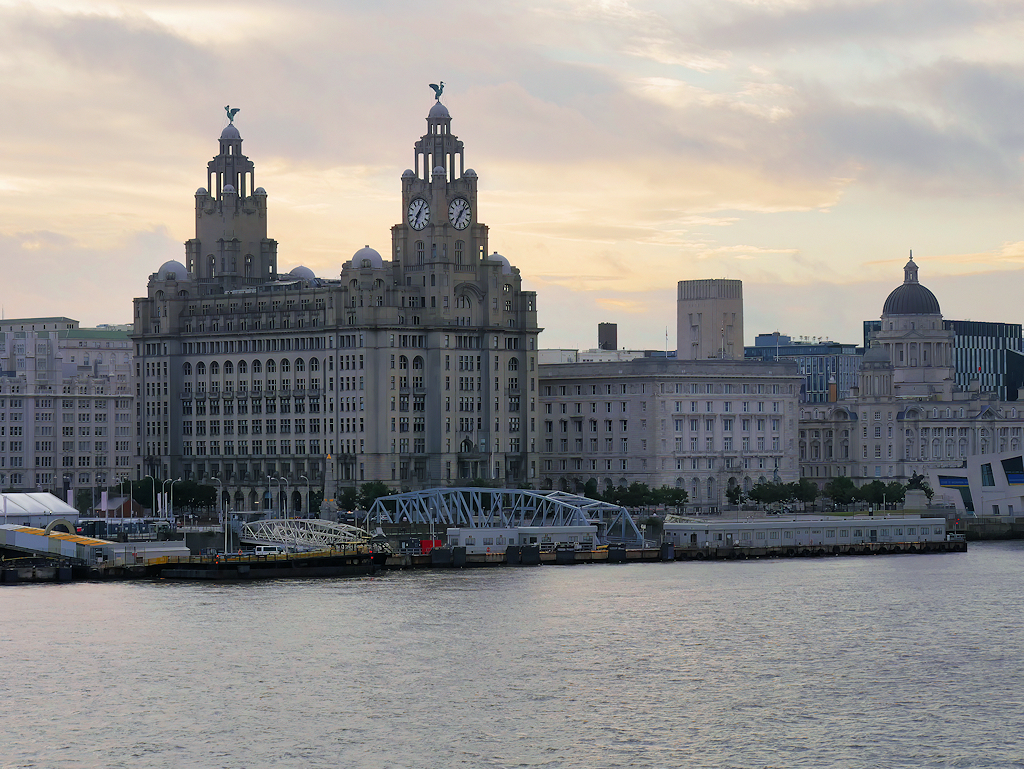
Liverpool City Region Mayor Steve Rotheram has called for television dramas to reflect more of the city’s character beyond crime and organised criminal activity, following the success of BBC series This City Is Ours, which generated nearly £9 million in regional spending during its first series.
Rotheram praised the drama’s production quality and performances but questioned its portrayal of Liverpool. In comments reported by the BBC on 11 November 2026, he said: “We need to get away from the drugs and crime and organised crime and criminal activity to what most people are renowned for, which is the warmth of their welcome, their friendliness, their humour.” He added those qualities better reflected what the Liverpool City Region meant to him.
The Mayor’s comments follow concerns raised earlier this year by Liverpool-born television producer Jimmy Mulville about the city’s recurring portrayal in crime dramas. The BBC, alongside the creative team and cast of This City Is Ours, have defended the programme and its portrayal of Liverpool.
The wider conversation of Liverpool’s representation on screen comes as the second series continues its run on BBC One, following a first series that attracted an average of 6.3 million viewers per episode. The BBC commissioned a third series in October, ahead of the second’s premiere, with filming planned in Liverpool in 2027. Beyond its television audience, the drama has supported local employment and attracted interest in the city’s filming locations, prompting new visitor guides and national media coverage.
The debate over Liverpool’s screen image
Rotheram’s concerns over the framing of the city’s character by crime dramas follow criticism earlier in 2026 from Liverpool-born television producer Jimmy Mulville, co-founder of Hat Trick Productions. Mulville questioned the cumulative portrayal of the city over the years through crime dramas including The Responder (2022–2024) and The Cage (2026), both broadcast on BBC One, alongside This City Is Ours.
Responding to Mulville’s criticism at the time, as reported by The Times, the BBC defended its Liverpool-set productions, pointing to the involvement of the city’s homegrown writers and the breadth of regional storytelling across its drama output.
The programme’s senior creative team has also discussed its approach to Liverpool and the responsibility involved in portraying organised crime.
In a March 2025 interview conducted by the BBC and published by UK television production trade publication Televisual, creator and writer Stephen Butchard described the city’s appeal: “Yes. It is a metropolis. It is a cinematic, international, good-looking city. A beautiful place in the daylight and at night.”
Lead director Saul Dibb addressed the responsibility involved in depicting organised crime: “You have a responsibility with subject matter like this not to glamourise it, to be truthful and to humanise it.”
In the BBC’s production notes for the first series, Liverpool-born actor Jack McMullen, who plays Jamie Phelan, highlighted the variety of locations featured in the series, from the docks to the Georgian Quarter: “The series shows a real range of locations, visually, and that’s something that I’ve not seen. I haven’t seen Liverpool shot like this before.”
More recently, series-one producer Simon Maloney discussed the relationship between the crime storyline and Liverpool’s portrayal in a July 2026 interview with the Royal Television Society: “Yes, it’s about a gang of cocaine dealers but it’s also about love and family. At its roots, it’s a love letter to Liverpool.”
Actors James Nelson-Joyce and Jack McMullen also defended the programme in October 2026, arguing that it portrayed the consequences of organised crime rather than glamourising it.
This City Is Ours: Two Series and a Third Commissioned
Created by Liverpool-born writer Stephen Butchard, This City Is Ours is produced by London-based Left Bank Pictures, whose credits include The Crown. The drama centres on Michael Kavanagh (James Nelson-Joyce), a senior figure in a Liverpool drug gang whose plans for a life with his partner Diana (Hannah Onslow) are threatened by a struggle for control of the organisation.
The first series, broadcast in March 2025, attracted an average of 6.3 million viewers per episode, according to figures released in October 2026, while the second series opened with 3.7 million consolidated viewers on BBC One.
Discussing the programme’s popularity with Radio Times in October 2026, lead actor James Nelson-Joyce suggested its appeal extended beyond the crime storyline: “A lot of people liked the love story between Michael and Diana. Liked the family. The sense of community.”
The BBC commissioned a third eight-part series of This City Is Ours in October, ahead of the second series premiere, with filming scheduled for 2027. Following the first series’ economic contribution, the return of this major production will be welcome news for Liverpool’s screen industry.
A £9 million contribution to Liverpool’s economy
The drama filmed across the Liverpool City Region for approximately 17 weeks in 2024, generating just under £9 million in regional spending and supporting the equivalent of 300 full-time jobs, alongside 17 trainees and two Film Office apprentices, according to Liverpool Film Office.
The production also received investment through the Liverpool City Region Production Fund, launched in 2019 with £3 million from the Liverpool City Region Combined Authority. Announcing the economic results in March 2025, Lynn Saunders, Head of Liverpool Film Office and the fund’s manager, highlighted the return on that investment: “The project has reported a total spend for the region at just under £9m which equates to just under £20 for each £1 spent of the Fund’s investment – which is an outstanding achievement.”
Mayor Rotheram also welcomed the results at the time, emphasising the opportunities created for local people: “The LCR Production Fund isn’t just bringing millions into our local economy – it’s opening doors for local people, giving them life-changing opportunities.”
In March 2026, Rotheram visited the set of the second series during filming at a restaurant in Liverpool’s Chinatown. According to an announcement by the Liverpool City Region Combined Authority, he met cast and crew to hear how they were benefiting from the region’s growing screen industry. Discussions also covered the proposed Littlewoods film and television campus, with This City Is Ours costume designer Bene Sebuyange welcoming its potential to help local film professionals build careers in Liverpool without having to move south.
The second series had a reported 120-day filming schedule, compared with the first series’ approximately 17-week regional filming period (the figures use different measures and are not directly comparable).
Production fund return
Nearly £20 generated for every £1 invested
Liverpool Film Office said This City Is Ours generated just under £9 million in regional spending, equivalent to just under £20 for every £1 spent from the Fund’s investment.
£1 → nearly £20
Source: Liverpool Film Office, March 2025. The quoted return relates to the Fund’s investment in This City Is Ours, not the full £3 million value of the Liverpool City Region Production Fund.
Filming locations attract national attention
On 4 November 2026, VisitLiverpool published an updated A–Z filming-location guide in collaboration with Liverpool Film Office, identifying scenes filmed at individual landmarks, restaurants and neighbourhood businesses and encouraging visitors to explore them.
Locations in the guide include Liverpool Cathedral, the Museum of Liverpool, the Bluecoat, Princes Dock Footbridge, Sefton Park and the White Hart pub on Hope Street in Liverpool city centre.
National UK publications including Radio Times, Cosmopolitan and Time Out have published filming-location features, reflecting growing interest in discovering the places featured in the drama and exploring the city beyond what audiences see on screen. Actor James Nelson-Joyce, who plays Michael Kavanagh, has also reported receiving enquiries from international viewers wanting to identify locations and restaurants featured in the series.
VisitLiverpool’s guide goes beyond identifying landmarks, connecting individual scenes with places visitors can explore as a way to support the city’s wider economy, including independent cafés, pubs and restaurants. This forms part of Liverpool’s wider promotion as a screen destination, including dedicated filming-location guides for House of Guinness and Peaky Blinders. As yet, no dedicated This City Is Ours guided tour has been confirmed.
Filming in Spain
Filming also returned to southern Spain, with both series using locations around Málaga and Marbella. The first featured the Port of Málaga, doubling for Santander, alongside a Marbella villa, Torcal National Park and Cartagena. The second introduced new locations including Felipe’s villa in Marbella and the Nota Blu Marbella restaurant.
Spanish production services were provided by Palma Pictures, a Spain-based company specialising in international film and television production. Málaga Film Office identified This City Is Ours in its industry reports for both 2024 and 2025.
Its February 2026 report recorded €7.9 million in direct local production spending across Málaga in 2025, up 46% on the previous year, with television series accounting for more than €4 million. The individual contribution from This City Is Ours was not disclosed.
Liverpool’s expanding screen industry
According to Liverpool Film Office figures reported by the Royal Television Society in July 2026, 294 productions filmed across the Liverpool City Region in 2025/26, generating more than £40 million for the local economy and supporting over 1,100 jobs. Recent productions include Netflix’s House of Guinness, ITV’s G’wed and BBC drama The Cage.
Liverpool’s architecture and experienced crews have attracted productions using the city to double for London, New York and Berlin. Productions supported by the Liverpool City Region Production Fund are also required to source 60% of their crews locally.
Filming across the Liverpool City Region
Recorded filming days in five constituent boroughs, 2019–2025
Liverpool Film Office’s February 2026 impact report recorded 668 filming days and £20 million in inward production investment in Wirral between 2019 and 2025. Sefton recorded a further 407 filming days and £11.5 million in investment over the same period.
Source: Liverpool Film Office, Impact Report 2019–2025. Figures cover five of the Liverpool City Region’s six boroughs. Liverpool city is not included in this comparison.
Screen success and the question of representation
Liverpool is not alone in facing questions about its screen portrayal. In Belfast, BBC crime drama Bloodlands (2021–2022), starring James Nesbitt, prompted concerns about Northern Ireland’s repeated association with violence and the Troubles. Following its premiere in February 2021, The Independent reported viewers questioning why television dramas continued to focus on those themes, while The Irish Times criticised the series for presenting an unflattering picture of Belfast to potential visitors.
In London, Hackney Council refused permission for Top Boy to film on its council estates in 2011 over concerns about negative stereotyping. Then-mayor Jules Pipe argued that residents should not have their neighbourhoods portrayed as dominated by drugs and gangs. The refusal applied to council estates, and did not prevent filming elsewhere in Hackney.
Across the Atlantic, The Wire, filmed in Baltimore over five series between 2002 and 2008, prompted similar concerns. Writing in The Guardian in January 2008, former mayor Kurt Schmoke acknowledged the problems depicted in the drama but argued that it overlooked much of the city’s cultural, educational and visitor appeal.
For Liverpool, Mayor Rotheram’s comments underline a wider challenge for cities attracting major film and television productions, including how to capitalise on the investment and exposure they bring whilst also ensuring that the stories told on screen do not dominate how audiences perceive the city.