From historic estates to working courthouses, a recent industry forum in Belgium examined what it takes to accommodate film and television productions at locations where conservation, security and everyday operations must also be considered.
Film commissions, producers, location managers and heritage representatives gathered at the third Film Partnership Forum on 8 October, held at the Waterloo 1815 Memorial in Braine-l’Alleud as part of the Waterloo Historical Film Festival.
Organised by Wallimage Tournages, Screen Flanders and visit.brussels Film Commission, the event drew on production experiences to explore the practicalities of filming at historic properties, government buildings and other sensitive locations.
In a detailed account of the discussions published on 22 October, Belgian film-industry publication Cinergie reported on the challenges faced by several productions and the organisations responsible for their filming locations.
One example was La Vénus électrique, Pierre Salvadori’s French-Belgian comedy, which opened the 2026 Cannes Film Festival before reaching French and Belgian cinemas in May.
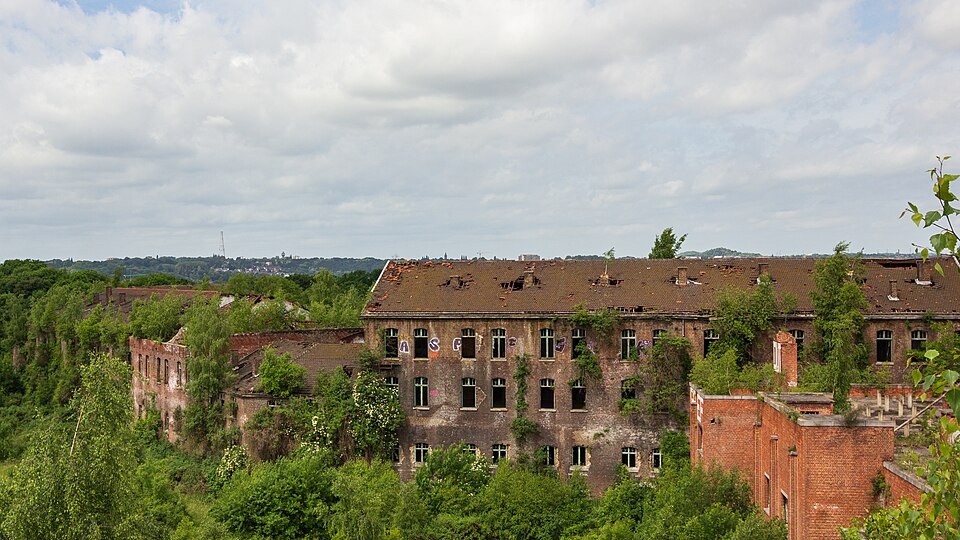
The production used the historic Chartreuse site in Liège to recreate the surroundings of 1920s Paris. However, the site’s condition and protected status complicated filming arrangements, with the city initially refusing permission.
Although director Pierre Salvadori had selected the location, the City of Liège initially refused permission because of restrictions affecting the site. According to Cinergie, location scout Catherine Goffin explained that preparations had to continue without all the necessary approvals in place. Even after receiving municipal approval, the production still needed authorisation relating to the site’s protected heritage status, alongside arrangements to safeguard its green spaces.
Tatjana Kozar of Belgian co-producer Versus Production described how the different parties eventually met on site to work through the outstanding issues. Representatives examined where dressing rooms could be installed, how cast and crew would move through the grounds, and what security arrangements would be needed. Each adjustment affected the production’s logistics and costs. The involvement of the Walloon Heritage Agency was particularly important in establishing how filming could proceed while limiting its impact on the historic site.
Working courthouses presented different challenges.
For Les Pas perdus, directed by Roda Fawaz and Thibaut Wohlfahrt, the filmmakers initially considered Brussels’ Palais de Justice before securing a courthouse location in Antwerp. The production’s lengthy, uninterrupted sequences required access for rehearsals as well as filming.
Representatives from Belgium’s federal justice administration explained that productions must accommodate court proceedings and security requirements. The nature of the script can also influence access, with projects directly connected to the justice system potentially easier to accommodate than those seeking a courthouse simply as a backdrop.
Private Heritage Ownership
Private heritage ownership was another subject of discussion. Emmanuel d’Oultremont, owner of Château de Warfusée near Liège, joined representatives from the production sector to consider the implications of welcoming film crews to historic properties.
The discussions highlighted how filming commitments extend beyond shooting days, with preparation, equipment installation and the subsequent return to normal use all requiring agreement between production teams and property owners.
Location research and negotiation also carry costs, particularly for productions working with limited budgets. Those pressures come amid wider funding uncertainty, including the decision to discontinue the Screen Flanders economic production-support scheme from January 2027.
The discussions in Waterloo illustrated that making historic and working locations available for filming involves considerably more than granting permission. From conservation requirements to the everyday operation of public buildings, successful shoots depend on early planning and cooperation between producers, location owners and public authorities.
Belgium’s cross-border film industry
Belgium has a well-established international co-production industry, with France its largest filmmaking partner.
According to France’s National Centre for Cinema and the Moving Image (CNC), Belgium was France’s leading film co-production partner in 2024, with 47 films involving both countries. The relationship remained significant in 2025, with 44 co-productions, including 38 in which France was the majority partner.
Belgium’s production infrastructure is organised regionally, with film commissions serving Flanders, Wallonia and Brussels. Their responsibilities extend beyond promoting filming destinations.
Wallimage Tournages, which assists productions across Wallonia, maintains a database of more than 3,000 potential filming locations. Its services include helping producers find suitable properties, local technicians and contacts within public authorities, as well as navigating filming permissions.
In Brussels, the visit.brussels Film Commission coordinates requests involving the capital’s 19 municipalities, where filming regulations, application deadlines and charges can vary. Some applications require several weeks of preparation, particularly when productions need road closures, parking restrictions or access to public buildings.
Screen Flanders provides information about filming locations, permits and audiovisual facilities in the Flemish region.
The three organisations’ involvement in the Waterloo forum therefore reflects a wider responsibility: helping productions secure locations and work with the institutions, local authorities and property owners responsible for them.
International co-production figures do not establish how many films are actually shot in Belgium. They do, however, provide useful context for the industry’s continuing work to make locations available to domestic and visiting productions.