
DCM Upfronts 2026: The Hidden Value of Cinema Advertising
Cinema accounts for only a small share of advertising budgets, yet Digital Cinema Media’s (DCM) Upfronts 2026 report, published in July and which looks at the first half of the year, argues this channel delivers a disproportionately large commercial impact through audience attention, cultural relevance and long-term effectiveness. For those in the tourism industry, the findings in the report, whilst broad, show not only the power of cinema to inspire people to dive more into the locations featured in the film, but also as a way to show adverts to a more receptive audience than other advertising formats.
The report draws together new audience research, campaign performance analysis, and independent media effectiveness data from Ebiquity. Serving as the independent effectiveness and benchmarking partner for the report, Ebiquity provided the core attention metrics and long-term profit modeling featured throughout the study.
DCM, which sells advertising screen space across UK cinemas, uses these findings to challenge brands to look beyond low-cost impressions and short-term ROI when evaluating campaign efficiency. More so, DCM argues that in 2026 and beyond, the medium’s greatest strength lies in the mindset of audiences who have actively chosen to be there.
While cinema receives around 2% of advertisers’ annual media budgets, Ebiquity’s analysis presented in the Upfronts report estimates it generates more than twice the long-term incremental profit per 1,000 impressions of television, and more than five times that of online video
This article examines the key findings of DCM’s Upfronts 2026 report and considers what they could mean for screen tourism and destination marketing.
Cinema’s advantage begins before the advertising starts
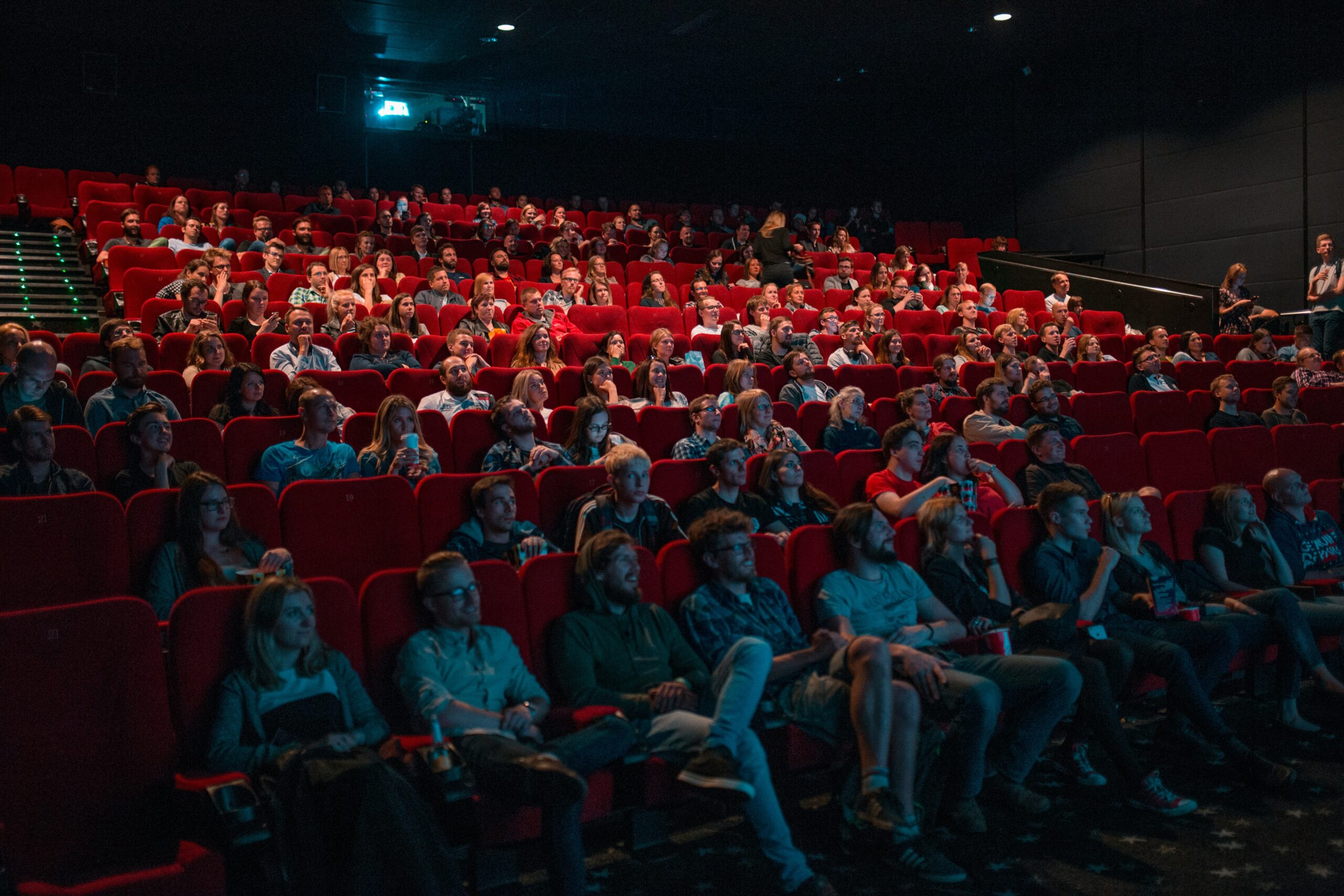
The report argues cinema provides a fundamentally different advertising environment because audiences have deliberately chosen to attend, are anticipating the film and so in a more positive frame of mind, and are sharing a cultural experience with others. Unlike many digital environments, advertising appears before the main event rather than interrupting it, which in the other formats can lead to a more negative opinion of the advertising.
Research found excitement peaks as audiences settle into their cinema seats. Immediately before the film, 47% of cinemagoers reported feeling excited, 39% happy, 31% focused, 17% amazed and 13% nostalgic. At the same time, 63% agreed that cinema advertising is an expected part of the overall experience.
The report argues this combination of anticipation, attention and emotional engagement creates conditions that are difficult to replicate elsewhere in the media landscape, which gives cinema far greater power as seen in other data and insights.
Shared cultural moments create commercial value
The report places significant emphasis on cinema’s role in creating cultural moments which has a positive impact on those brands that choose to advertise in the right way to these audiences.
It defines these cultural moments as shared, time-bound experiences that generate wider conversation, and remain memorable long after the cinemagoing experience itself.
Although cinema represents just 1% of the total hours people spend watching overall video content, respondents associated it with 28% of spontaneously recalled cultural moments. Together, cinema and television accounted for 85% of commercially available entertainment that audiences considered culturally resonant.
Separate research cited in the report found that brands advertising around cinema’s cultural moments were more likely to be viewed as high quality, established, and category-leading. Respondents also assigned approximately 10% greater value to a mobile network when they believed it advertised in cinemas rather than through media generally.
The Macro Picture: How Cinema Fits the Media Landscape
Drawing together industry benchmarks from AA/WARC and IPA TouchPoints, Ofcom’s latest Media Nations report puts cinema’s position in the UK advertising market into official perspective. The report records total UK advertising spend at £46.7bn in 2025, with cinema advertising rising 3% to £220m. Over the same period, TV advertising fell by 1% to £5.2bn as audiences continued to spread across streaming and social platforms.
IPA TouchPoints data compiled in the report shows that 12% of UK adults attend the cinema at least monthly, compared to 85% who use social media and 80% who watch video-on-demand. This highlights why the big screen remains a distinct, event-based outing rather than an everyday reach vehicle. In a crowded media market dominated by quick online scrolling, cinema’s physical setting offers advertisers a focused, phone-away environment where audiences gather for a shared experience
Attention, not impressions, is the key measurement
In a section examining cinema’s ‘hidden value’, the report argues that conventional media planning often undervalues the cinema channel by prioritising the cheapest impressions rather than the quality of audience attention. Drawing on Ebiquity analysis, it found cinema generated more than three times the attentive viewing of television (21,000 attentive seconds per 1,000 impressions versus 6,800), more than nine times that of online video (2,300) and more than 26 times paid social media (800).
The same analysis estimated cinema delivers more than twice the long-term incremental profit of television (more than £100 versus £48 per 1,000 impressions), more than five times online video (£18), around nine times over out-of-home (£11) and ten times over paid social media (£10). Separate benchmarking also found premium cinema placements generated five times more attention than online digital advertising, three times higher conversion than programmatic advertising and 1.4 times the returns of daytime television.
DCM’s 2025 Report on Maximising Price
This focus in this report on commercial effectiveness builds directly on DCM’s 2025 study with research agency Everyday People (‘Maximising price: The role of media’), which demonstrated that the advertising environment directly influences what consumers are willing to pay. By testing brands across nine media channels, the study revealed that advertising in cinema’s premium, distraction-free environment increased a brand’s ‘optimal price’ by an average of 12% above the all-channel average. While the 2025 research proved that cinema reduces price sensitivity by building perceived value, the 2026 report shows how that premium mindset translates directly into long-term profit.
Better measurement and more precise planning
The report also argues cinema has become considerably more measurable than many advertisers assume. Campaign delivery can now be independently verified by film, cinema, postcode, screening, admissions and date, allowing advertisers to understand not only how many people were reached but precisely where campaigns were delivered.
Since the transition to digital cinema, advertisers have increasingly been able to plan and verify campaigns at a far more granular level. Whereas film-based advertising relied on physical reels and broad regional reporting, digital delivery enables campaigns to be scheduled, updated and verified at the level of individual screenings. Sales houses including DCM and Pearl & Dean now operate within that digital infrastructure, although DCM was the first UK cinema advertising company to fully switch its own advertising operations to digital in 2012.
The emphasis on measurement reflects a broader debate across the UK advertising industry. In the IPA’s Go Big or Go Home report by Les Binet and Will Davis published in May, analysis of the IPA Databank revealed that while average media ROI had risen slightly (+4% post-pandemic), net profit generated by campaigns actually fell by 11%.
The authors of the IPA report warned against an ‘obsession with short-term efficiency,’ demonstrating that budget and scale account for 89% of variation in incremental profit, compared to just 11% from short-term ROI optimisation. DCM’s findings provide fresh evidence for that cautionary approach to wider short termism, demonstrating that paying for genuine audience attention delivers significantly higher long-term profit returns than optimising for the lowest cost per impression.
Creative designed for cinema continues to outperform
The report also suggests advertisers may be missing an opportunity by treating cinema as simply another outlet for a television commercial. Research from DCM and market research agency Differentology’s Campaign Effectiveness Databank – a proprietary database of measured cinema advertising campaigns – found that campaigns created specifically for the cinema environment consistently outperformed standard TV adverts repurposed for the big screen.
The biggest improvement was in brand recall – the number of people who remembered the advert afterwards – which increased by 57% (from 37% to 58%). Brands were also 47% more likely to make it onto a consumer’s shortlist when they were deciding what to buy (15% to 22%), while positive perceptions increased by 55% (20% to 31%). The proportion of people who said they would recommend the brand also rose from 30% to 53%.
The findings build on a point raised earlier in the IPA’s Go Big or Go Home report. While the IPA report argues that memorable, distinctive creative is becoming increasingly important in a fragmented media landscape, DCM’s research suggests that, in cinema at least, advertisers may also need to think about how that creative is adapted to the cinema environment in which it appears, rather than simply reusing a television advert.
Strategic consideration: Is dedicated cinema creative worth the investment?
One of the report’s more interesting findings is that creative designed specifically for the cinema environment is likely to outperform an unchanged television advert. That presents a practical decision for destination marketers.
Many organisations already have existing television, digital or online video assets that could be adapted for cinema. Commissioning dedicated creative represents an additional investment, so the decision becomes whether the expected benefits justify the cost.
The answer will depend on factors such as campaign budget, the scale of the cinema buy, the number of markets using the creative and how long it is expected to remain in circulation. For campaigns supporting major film releases or destinations expecting sustained visitor interest, a bespoke cinema advert may become a longer-term asset rather than a one-off production cost.
Cinema and the Investment Question
The report makes a compelling case for cinema’s ability to capture attention, create memorable cultural moments and deliver stronger long-term commercial returns. One question naturally follows for destination marketers and the media planners advising them: if the evidence presented in this report is so compelling, does that also mean cinema is a significantly more expensive channel to invest in?
The answer is more nuanced than a simple price comparison. While cinema has long been regarded as a premium advertising medium, there is no single industry benchmark that definitively states whether it is more or less expensive than television, online video or other channels. Instead, media planners typically compare channels using cost per thousand (CPT), the industry’s standard measure of buying efficiency.
However, CPT measures only the cost of reaching an audience. It does not measure the attention that audience gives to an advert or the commercial value that attention ultimately creates. Increasingly, the industry has explored attention-based measures, including attention cost per thousand (aCPM), developed through research by Ebiquity, Lumen Research and TVision, which combines buying cost with the amount of attention advertising receives.
Viewed in that context, DCM’s findings become more meaningful. Rather than suggesting cinema is simply a cheaper or more expensive medium, the report indicates that it consistently delivers high levels of attention, memorability and long-term effectiveness. For destination marketers and the agencies advising them, the investment question is no longer simply how much cinema costs, but what value it delivers for the investment made.
Why this matters for screen tourism
DCM is, naturally, a strong advocate for cinema advertising. Even so, the breadth of data and insights brought together in its Upfronts report provides destination marketers with a stronger evidence base when evaluating where cinema might fit within a wider channel mix for screen tourism campaigns.
Its publication also comes at a timely moment. While not every destination has yet embraced screen tourism as part of its marketing strategy, growing awareness of its potential to drive and broaden tourism is shifting the conversation. VisitBritain research from 2025 found that 91% of potential visitors across 20 international markets would be interested in visiting film and television locations during a trip to the UK, underlining the growing importance of screen tourism as a driver of destination choice.
For destination marketers exploring the opportunities presented by screen tourism, the conversation should extend beyond the opportunity itself to the channels used to support it. As organisations consider how best to convert on-screen inspiration into visitor demand, DCM’s report provides compelling reasons for evaluating the role cinema could play within a wider channel mix.
Cinema’s role in the inspiration stage
Research from Expedia Group’s Path to Purchase study provides further useful context. It found that around 62% of UK travellers had not yet decided on a destination when they first began planning a trip, highlighting the importance of the early inspiration stage before practical considerations such as price, flights and accommodation begin to shape decisions.
DCM’s findings become particularly relevant for destination marketers looking to broaden their visitor base through screen tourism and assess the merits of adding cinema to their existing channel mix.
If cinema creates higher levels of attention, emotional engagement, memorability and perceived value than many other advertising environments, it is well placed to influence travellers while they are still deciding where to go. For destinations looking to convert on-screen exposure into visitor demand, that suggests cinema could play a distinctive role within the wider channel mix at one of the most influential stages of the travel decision-making process.
Cinema advertising and screen tourism
For destination marketers, the findings in this report raise questions about where the channel fits within a wider marketing strategy. As cinema advertising is shown before the film begins, some cinemagoers will have had little or no engagement with the film’s marketing campaign. Others will already be familiar with the film through trailers, cast interviews, behind-the-scenes footage and other marketing, with some even having looked up the locations featured. That creates an interesting dynamic for destinations looking to capitalise on a film’s release, as audiences may be engaging with the same advertising from very different starting points.
As the report argues, cinema also offers something few other advertising channels can match. For screen tourism marketers, that makes cinema a distinctive channel, as the destination advert sits alongside the very film that has the potential to influence future travel decisions.
Beyond the big screen: The emotional spark of cinema advertising
For most destinations, a cinema advert is unlikely to be the point at which someone books a holiday. Its value comes much earlier in the visitor journey, when people are still looking for inspiration, forming preferences and considering where they might travel next. Shown on the big screen, a well-crafted cinema advert has the potential to make a destination feel more memorable and emotionally compelling, while sparking wanderlust at a particularly receptive moment.
For screen tourism campaigns, the advert can introduce the real destination just before audiences see those same locations brought to life in the film. Seeing those places woven into the story can deepen that initial sense of wanderlust, particularly when they play a prominent role or become almost a character in their own right. That interest may then continue after the credits, prompting cinemagoers to search for filming locations, revisit scenes or find out more about the destination.
This is where DCM’s report adds an important perspective. If cinema is particularly effective at capturing attention, creating emotional engagement and making advertising more memorable, then it may also be uniquely placed to inspire potential visitors at one of the most influential stages of the visitor journey, just before they experience those same destinations as part of the film’s story on screen.