The launch of Grand Theft Auto VI on 19 November 2026 has put Miami, the inspiration for the game’s fictional Vice City, at the centre of a major promotional campaign. Miami-Dade County announced a $3.9 million package of advertising agreements involving developer Rockstar Games and commercial partners, looking to capitalise on worldwide interest in the release and generate additional local revenue. The scale of the game’s international appeal was evident long before launch, with its second trailer generating more than 475 million views across platforms in 24 hours, according to Rockstar Games.
The arrangements include advertising at Miami International Airport, PortMiami and across the county’s transport network. Earlier discussions went as far as suggesting the temporary rebranding of Miami International Airport as Vice City Airport, although the idea was not adopted. The Miami Heat, the city’s NBA basketball team, has also collaborated with Rockstar on Vice City-themed uniforms, merchandise and a special event on 18 November. A giant Welcome to Vice City display was installed on the roof of the team’s Kaseya Center arena in September, visible to passengers flying into Miami. Jennifer Alvarez, a Miami Heat executive, told the Associated Press that 30% of orders for the team’s Vice City merchandise collection had come from outside the United States, with products being shipped to 60 countries.
Miami’s 20-year relationship with Vice City
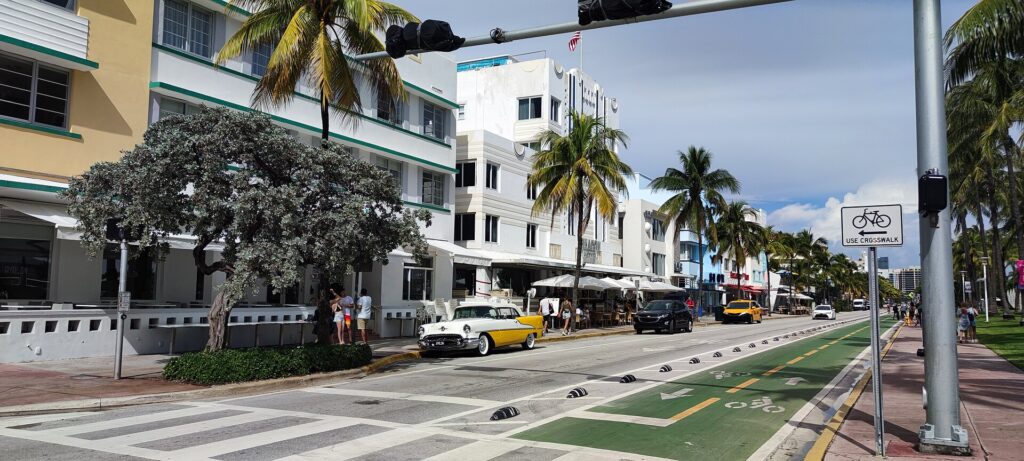
Miami’s relationship with Grand Theft Auto stretches back to 2002, when Grand Theft Auto: Vice City introduced millions of players to a fictionalised version of South Florida. The game sold at least 17.5 million copies, while its 2006 follow-up, Vice City Stories, has sold more than seven million. The connection between the fictional world and the real city was already being noted in 2004, when a Washington Post article described arriving in South Beach and recognising streets from the game.
Today, independent operators are marketing GTA-themed tours of Miami, including routes taking in Ocean Drive, South Beach’s Art Deco district and downtown locations associated with the games. The connection between GTA and tourism extends beyond Miami. In Los Angeles, Santa Monica Pier’s Pacific Park has highlighted its appearance as a fictionalised attraction in GTA V, while independent operators offer game-inspired sightseeing tours of the city.
From Miami Vice and Scarface to Grand Theft Auto
The link between Grand Theft Auto and the film and television world is grounded in the creative influences behind the original Vice City. In a 2012 interview, the game’s executive producer, Sam Houser, identified the 1980s television series Miami Vice as its strongest influence, particularly Michael Mann’s use of colour, lighting and production detail. Brian De Palma’s 1983 film Scarface was another major influence, particularly on the storyline, with the game featuring a mansion inspired by Tony Montana’s residence and a climactic shootout mirroring the film’s finale. For all its cinematic influences and commercial success, the franchise has not received an official film adaptation. In 2022, games industry figure Kirk Ewing revealed that Rockstar had rejected a reported $5 million proposal around 2001 for a GTA film starring Eminem and directed by Top Gun director Tony Scott.
The commercial opportunities for Miami’s tourism industry are well established, from international merchandise sales and themed tours to advertising agreements worth millions of dollars. Travel and city guides are also mapping the real Miami behind Vice City. On 7 October, CBS News Miami reported that fans had identified more than 100 recognisable locations in the game’s promotional footage, while The Miami Guide has published a dedicated guide covering real-world landmarks, visitor experiences and launch celebrations.
Rockstar Games and PlayStation are also staging Grand Theft Auto VI: The Festival at Mana Wynwood on 21 November, featuring Travis Scott, Cardi B and a DJ set from Justice. The campaign has divided some local officials, including Miami-Dade’s sheriff, who has opposed using public assets to promote a game centred on criminal activity. The question now is how Miami will convert international interest into additional visitors, and whether other destinations featured in previous GTA games will seek to capitalise on renewed interest in the overall franchise.