The Odyssey Effect: Peloponnese Moves Quickly to Convert Global Film Interest into Tourism
At a Glance
- Peloponnese unveils a coordinated tourism strategy to build on The Odyssey effect
- The Odyssey Route will connect the film’s key Greek locations with Homeric heritage sites
- International enquiries are rising, with strong interest from year-round US visitors
- Local and international operators are already launching Odyssey-themed tours
- A new regional DMMO has been launched to coordinate the Peloponnese’s tourism response
Greek news reports continue to cover preparations by the tourism industry and operators around the visitor profile of the Peloponnese peninsula and wider Western Greece area, as the first wave of the Odyssey effect following the film’s release continues to drive increased global attention.
The latest developments show the Peloponnese Region is moving quickly to convert The Odyssey effect into a coordinated tourism strategy, with an official Homer-themed driving route now in development, AI search becoming an important part of the region’s destination marketing strategy to capture and convert interest in the film’s locations, and growing international enquiries from prospective visitors.
The Odyssey Effect Enters Its Next Tourism Phase
Beyond just the film locations, the region is well prepared to provide a local tourism experience that broadens out across the whole of the Peloponnese, away from the southern area currently receiving most of the limelight. Earlier in June also saw the launch of the Peloponnese Mythic Trail Network, passing through the Messinia region as part of 12 major walking routes connected to the mythology and history of the peninsula, including Homer’s The Odyssey. Those connected to the rich archaeological sites of the region hope the film will also spark interest in wider Mycenaean culture, and in the future drive further Homeric trails into the Islands.
Interest in the region began, in arguably the first wave of the Odyssey effect, as soon as the region was linked to the film in early 2025, ahead of filming in March and April of last year. Now, as Christopher Nolan’s epic moves closer to $1 billion in worldwide takings after three weekends and also continues its record-breaking IMAX run, the Odyssey effect has ramped up another notch. The film is providing arguably the biggest global platform the region has ever received, with the continued success of the film increases the spotlight on the region with global media and public interest in the filming locations and history of the area.
The planned Odyssey Route is one of the clearest signs yet that the Peloponnese Region is moving quickly to convert the film’s release into a wider tourism opportunity, turning interest in individual filming locations into a structured road trip across the peninsula.
The Waves of the Odyssey Effect
The Odyssey effect is not a single surge of tourism interest. It is the result of successive waves of activity surrounding the film. As with blockbuster releases of this scale, some waves are proactively driven through the studio’s release strategy, marketing campaign and official publicity, extending well beyond the initial theatrical release into awards season, streaming and digital release.
Others develop independently through editorial coverage, creators, YouTubers and podcasters, media speculation, Christopher Nolan’s established fanbase, word of mouth and, as more people discover the film, The Odyssey‘s own growing fandom. Sometimes these studio, media and audience currents run in tandem, sometimes they reinforce one another. What already appears unusual is the scale and persistence of these overlapping waves, suggesting The Odyssey may develop a momentum unlike many blockbuster releases before it.
The Odyssey Marketing Waves: Announcement → Filming → First Look → Theatrical marketing campaign → Extended Box Office + IMAX Effect → Streaming and Digital Releases → Awards → Long-tail Tourism
The Odyssey Route Connects Filming Locations
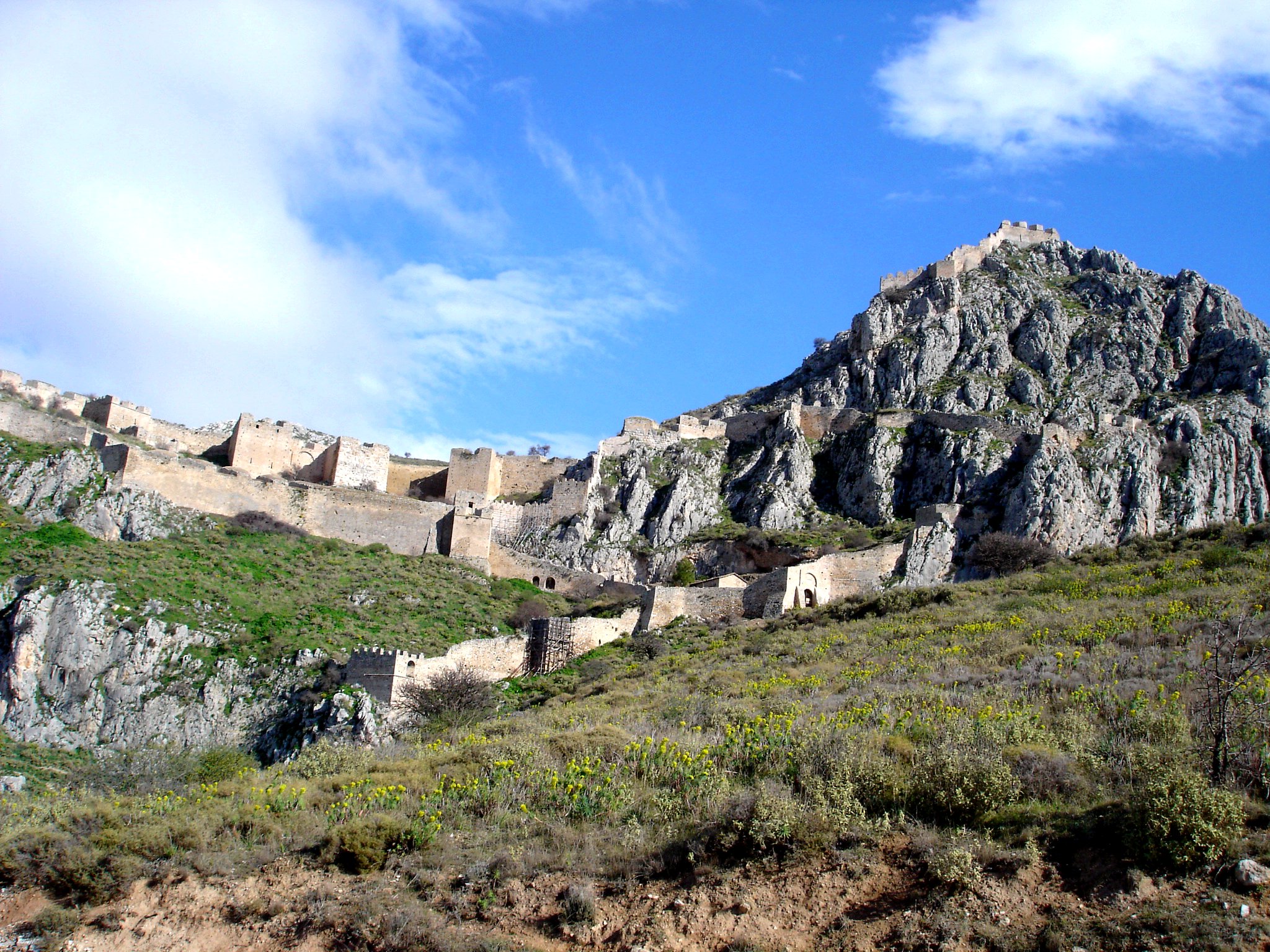
The region has confirmed the planned launch of The Odyssey Route – Homer’s Peloponnese, a road trip passing through ancient acropolises, Homeric palaces, mythical islets and caves, beaches and sea castles connected to the myth. Reported by Greek media outlet eKathimerini, the trip will start at the fort of Acrocorinth, where some filming also took place, passing through Mycenae, Sparta, Cranae and Pefnos before leading to the area connected to King Nestor, including Nestor’s Cave, and the wider Messinia area, which contained many of the film’s principal Greek locations.
Currently working on the signage for the road trip and the supporting website ahead of its launch, deputy regional governor for Tourism of the Peloponnese Region Thanasis Michelongonas told Greek news site eKathimerini that The Odyssey Route has been designed “to capitalise on the interest in the filming locations and channel it into the rich cultural reserve of the entire region”.
Growing Interest Beyond Peak Season
Noticeably, the local reporting also anticipates a broadening of tourism to the region outside the traditional summer and high seasons, particularly through interest from American tourists. Alexandros Thanos, adviser to the Greek Tourism Confederation (SETE), said of the potential benefits of the Odyssey effect: “The vast majority of people who seem willing to travel to see something they were interested in in cinema are usually Americans, a category of visitors that we are very interested in because of their economic footprint. They are also people who travel all year round,” he told eKathimerini.
Thanasis Michelongonas, deputy regional governor for Tourism of the Peloponnese Region, commented on the first signs that the film was going to have an outsized effect on tourism interest: “Since the end of last year, we have been inundated with requests from journalists and tourism professionals from all over the world and what we do is provide them with guidance and information on what the wider region has to offer.”
AI Search Becomes Part of the Strategy
On the region’s plans to link its marketing efforts and convert interest into tourism, and the growing importance of AI search at the heart of that strategy to capitalise on the Odyssey effect, Michelongonas said: “We are also running or adapting digital campaigns that indirectly link the promotion of the Peloponnese with Nolan’s film. And on a less noticeable level, we create content so that the main search engines, whether Google or artificial intelligence, connect us with those who express interest in visiting the places where the film was shot.”
As the Peloponnese Region places greater emphasis on AI-powered search to increase its visibility in recommendations and itineraries around searches for The Odyssey filming locations, it also signals how destination marketing is beginning to evolve alongside changing travel discovery habits. Phocuswright, a specialist global travel research firm, found that the proportion of US travellers naming search engines as their most-used resource for researching trips fell by almost 30%, from 51% in mid-2024 to 36% in late 2025, while the proportion actively using AI to plan trips increased by almost 40%, from 28% to 39%.
Data Behind Why Game of Thrones Comparison Falls Short
Across the Ionian Sea, comparisons have been drawn with the Game of Thrones effect on Dubrovnik and the tourism pressures associated with the Croatian city. However, Alexandros Thanos, adviser to the Greek Tourism Confederation, told eKathimerini that the two cases are not comparable.
In its reporting, eKathimerini adds further context to Thanos’s comments that comparing Messinia and the wider Peloponnese with the Game of Thrones effect in Dubrovnik is not the right framework. Pointing to tourism data from Eurostat, the Peloponnese region records around 28% fewer tourist nights per resident than the Greek average, with approximately 10.5 per resident each year compared with 14.5 across Greece. Dubrovnik records approximately 93 tourist nights per resident, according to the Croatian Bureau of Statistics, which means Dubrovnik has almost nine times as many tourist nights per resident as the Peloponnese.
While the comparison is not like-for-like, as it contrasts the city of Dubrovnik with the administrative region of the Peloponnese, the figures provide additional context to the Greek Tourism Confederation’s view that the two cases are not comparable.
eKathimerini also reports that the Peloponnese accounts for an estimated 1.8% of Greece’s tourism revenues, although the article does not identify the underlying dataset. For wider context, separate regional tourism analysis not included in the original eKathimerini reporting, published by INSETE, shows that Greece’s visitor economy is concentrated in a small number of regions, led by the South Aegean at 27% and Crete at 26.3%, each accounting for around 15 times the Peloponnese’s estimated share of tourism revenues in the country.
Homer and Odyssey-Themed Tours Expand
The response to the Odyssey effect, and to visitors seeking more bespoke experiences, is also being reflected by tour operators both locally and internationally. Since April, Costa Navarino in Messinia has offered The Messinian Odyssey Trail, an experiential journey combining locations and landscapes associated with Homer’s epic and Nolan’s film.
Internationally, operators including EF Go Ahead Tours, Audley Travel and Unforgettable Greece have also launched Odyssey-themed itineraries around the film’s release. Together with local initiatives across the Peloponnese, the developments point to growing confidence across the travel industry that interest in Homer’s epic and Nolan’s adaptation can be converted into visitor demand.
Peloponnese Launches 1,700km Mythic Hiking Trail
In another boost to the region that will enrich the tourism offering, June saw the launch of the community-led Peloponnese Trail, covering a 1,700km hiking network. Known as the Peloponnese Mythic Trail Network, it has been described as the largest social-economy initiative in hiking tourism in Greece.
The project, which was more than ten years in the making, links 12 major walking routes across the peninsula and offers a deep dive into Greek mythology and history. This includes the Messinia Trail, which passes through the olive-growing landscapes surrounding Kalamata, where The Odyssey was filmed.
Its launch this year comes at an ideal time, strengthening the wider tourism offer available to benefit from the Odyssey effect. By linking 12 major walking routes across the peninsula, the network can also encourage visitors to explore beyond the principal filming locations and spread interest across the wider Peloponnese.
Visit Peloponnese Launches New DMMO
The launch of Visit Peloponnese in June also comes as the region begins responding to the international attention generated by Christopher Nolan’s The Odyssey. With the creation of a regional Destination Management and Marketing Organisation (DMMO), the Peloponnese is among the first regions in Greece to begin implementing the country’s new destination governance model.
Rather than acting solely as another promotional body, the new organisation gives the region a dedicated body to coordinate its response as the Odyssey effect continues to evolve, helping bring together destinations, tourism businesses and cultural attractions under a single regional umbrella, while supporting the development of new visitor experiences, international partnerships and destination marketing.
Beyond the Film: Expanding the Homeric Tourism Story
For an area rich in archaeological sites, some hope The Odyssey effect will encourage people to explore places outside those used in the film. “The epics, and especially ‘The Odyssey,’ are an excellent starting point for learning about Mycenaean culture,” said Sharon Stocker, archaeologist and professor at the University of Cincinnati, speaking to eKathimerini. Stocker has been directing the excavations at Nestor’s Palace alongside her colleague Jack Davis.
On her hopes for people exploring beyond the locations connected to Nolan’s The Odyssey, and for an expansion of Homeric tourist routes beyond the region, Stocker continued: “We hope that the film will draw attention to the numerous places mentioned by Homer, but also to the Mycenaean era in general. I can already imagine a coherent ‘Homeric Route’ connecting areas of the western Peloponnese with the Ionian islands.”
The Odyssey Effect: Could It Redefine Screen Tourism?
While awareness and understanding of screen tourism continue to grow, the ability of major blockbuster films to drive tourism well beyond their theatrical release has long been recognised across the industry. However, The Odyssey is already beginning to show signs of following a very different trajectory.
If the early indicators continue, the combination of sustained global box office success, an extraordinary extended theatrical run, fuelled in large part by a record-breaking IMAX run, and successive waves of new audiences discovering the film could establish a new benchmark for how destinations capitalise on blockbuster releases of this scale. As an epic filmed across multiple countries and landscapes that are central to the story itself, The Odyssey may also help reshape how the screen tourism opportunity around films of this scale is understood, with each new wave of audiences expanding the film’s evolving fandom, creating fresh opportunities for destinations every time a new audience discovers the film.
Odyssey Screen Tourism Waves: Filming → First Look → Theatrical Release → Extended Box Office Momentum → IMAX Effect → Streaming & Home Entertainment → Awards Season → Continuing Word of Mouth, New Audiences & Fandom → Long-term Legacy