One in six visitors now travel to Scotland because of film or TV, driving £787 million in annual tourism spending
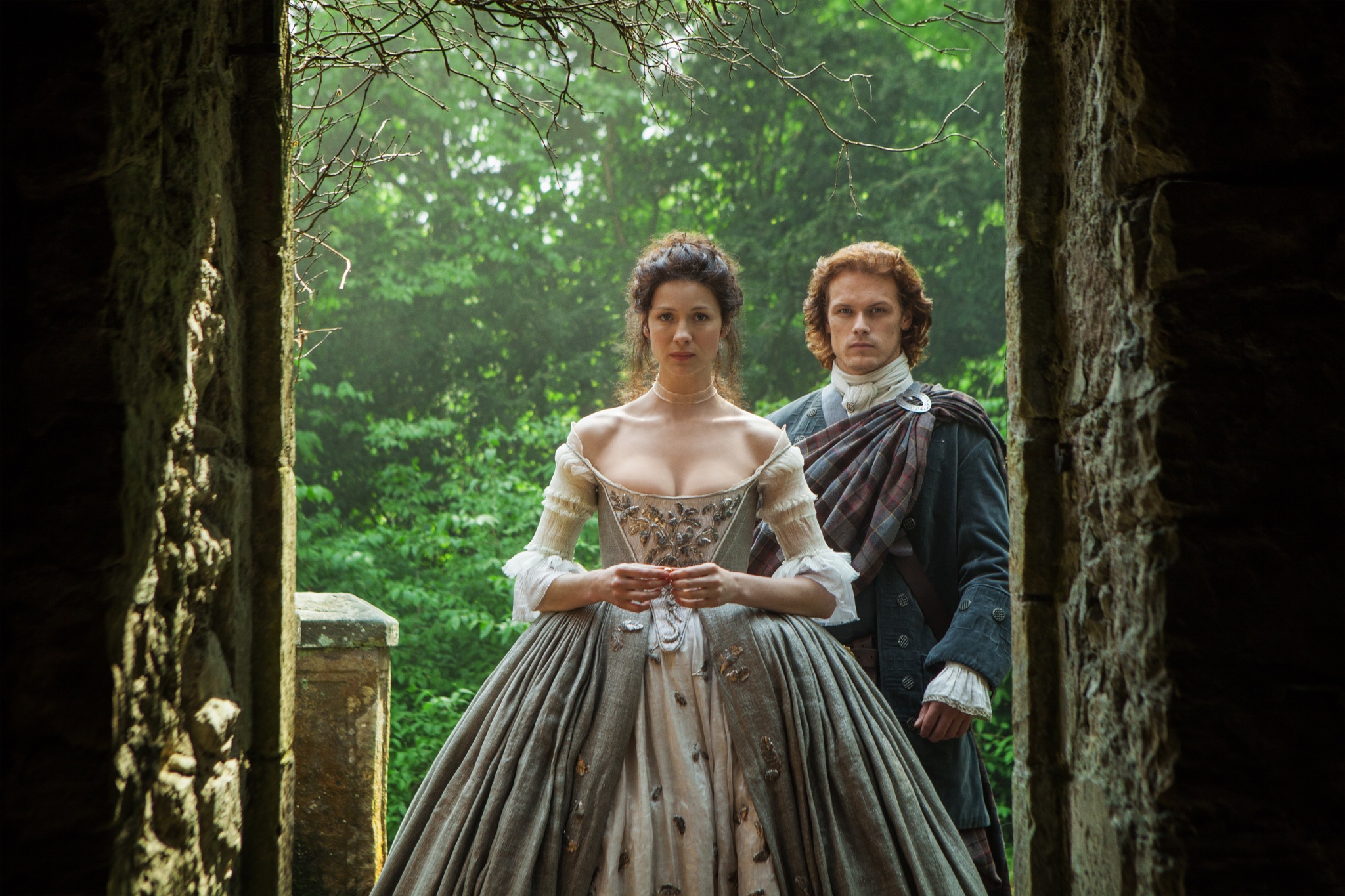
Promotional still from Outlander (Sony Pictures Television, 2014). © 2014 Sony Pictures Television Inc. All Rights Reserved.
At a Glance: Scotland’s Screen Tourism Impact
- 16% of all visitors to Scotland in 2023 travelled because of film or TV.
- The Outlander Effect accounted for 54% of screen tourism and over one million extra site visits since 2014.
- 68% of screen tourists were international — up from a 50/50 split in 2016.
- Screen tourism generated £787 million in visitor spending in 2023, including £161.4 million directly linked to film and TV.
- The sector supported nearly 3,000 full-time jobs and contributed £89.4 million in GVA to Scotland’s economy.
- Braveheart and Harry Potter continue to drive visitors decades after release, proving the long-tail value of screen tourism.
- Figures drawn from The Economic Value of the Screen Sector in Scotland and The Outlander Effect reports (2024).
The economic contribution for films and TV programmes to generate economic benefits for the countries and regions, is starkly brought into focus by a new study from Screen Scotland – the agency that drives development of all aspects of Scotland’s film and TV, in particular the long-running series Outlander broadcast to over 87 territories . In addition VisitScotland also produced The Outlander Effect (VisitScotland, 2024), which highlights the series as a unique case study within Scotland’s wider screen tourism success.
Measuring the impact of screen tourism, alongside production, inward investment and jobs, The Economic Value of the Screen Sector in Scotland revealed that film and TV are now a significant draw for tourism with just over one in six visitors to Scotland in 2023 visiting because of film or TV.
The Data Behind Scotland’s Screen Boom
Commissioned by Screen Scotland, Saffery Champness and Nordicity consultancies were commissioned to create an economic impact study for 2023, two years on from the last study in 2021. One of the key parts of the study is the look at growth in screen tourism helping the tourism economy rebound in the face of the downturn caused by the pandemic. Outlander the series has been the most powerful driver of inbound tourism and responsible for more than half of screen tourism interest, 54%, and over a million extra site visits to the Scottish filming location since the series first started airing in 2014.
In terms of the boost to sites connected to the series the study shows the numbers are equally revealing. The National Trust for Scotland has reported increases of more than 60% at heritage sites linked to Outlander. VisitScotland data showed that 19% of all visitors and more than a third of long-haul travellers stated that film, TV or literature is part of their decision to visit.
Filming Locations That Transformed Visitor Numbers
Locations that appeared in Outlander saw notable and lasting growth, and in some cases continuing years after their on-screen debut. Broken down in more detail in The Outlander Effect, these visitor numbers are based on data from the Moffat Centre’s Visitor Attraction Monitor (2014–2024). Outlander also ranks among the most mentioned titles for visiting its filming locations, like Falkland, Doune Castle and Blackness Castle which have seen an exponential visitor growth over the past ten years. Some of the highlights in the study include:
- Blackness Castle, which appeared in the first season and saw 77,326 visitors in 2024, more than four times the number in 2014, which saw 16,559 visitors
- Newhailes House in Edinburgh, featured in the fourth series, which aired in 2018, saw visitor numbers leap from 4,831 in 2014 to 304,111 in 2024, a staggering 6,000% increase
- Glasgow Cathedral, the location featured in season two of the show, continued to climb by 81.5% from 2016-2019
- Since its first appearance in the show, the Mill has seen a more than two fold increase in visitors, with 3,328 visitors to the site in 2024
Other locations featured that also saw rises after featuring in Outlander include:
- Culloden Visitor Centre – Outlander + wider heritage interest – up 279%
- Doune Castle – Outlander, Monty Python – up 154%
- Glencoe Visitor Centre – Skyfall, Harry Potter – up 177%
- Preston Mill & Phantassie Doocot – Outlander – up 6,195%
- Craigmillar Castle – Outlaw King, Mary Queen of Scots – up 84%
- Linlithgow Palace – Outlander (Wentworth Prison) – up 34%
What exactly is the Outlander Effect?
Scotland’s history and landscape play an integral role in both the books and television show, with its castles, landscapes and lochs, Outlander has featured and filmed at a number of locations across Scotland. According to VisitScotland fans of the show have been inspired to travel, explore and experience iconic locations, from both literature and screen, thus creating the Outlander Effect.
Commenting on the power of the series, Jenni Steele, film and creative industries manager for VisitScotland said, “It’s got romance, it’s got battles, it’s got culture, it’s got Gaelic, it’s got music, it’s got food and drink and the mystery about people trying to change through different time zones and periods in history. Anything we put out about Outlander did really well in terms of media coverage, social interest and engagement on our website. And it just became this huge, huge hit.”
The Numbers Behind the Screen Tourism Boom
The overseas visitor share of screen tourism has grown by 2023 to over two-thirds of the total, a striking shift from when numbers were first tracked in 2016 when they were a more even split, at 50% each. That shows that film and TV and notably Outlander in particular in just over ten years has contributed to being a draw for overseas visitors. This is alongside other internationally visible productions filmed wholly or partially in Scotland like Skyfall, Mary Queen of Scots, and Harry Potter.
More so a decade after filming began, Outlander’s impact continues to ripple through Scotland’s visitor economy. In terms of the contribution to the Scottish economy, the study also shows that Screen tourism in Scotland now generates £161.4 million in visitor expenditure, which contributes £89.4 million in direct GVA – the measure used to calculate the economic value added to Scotland’s economy, and sustains 2,260 jobs nationwide. Furthermore, screen tourism spending in Scotland also topped £787 million in 2023, supporting nearly 3,000 full-time jobs across accommodation, food, transport, retail, and culture.
Beyond tourism, the report also captures the wider economic weight of Scotland’s screen sector as a whole. In 2023, it contributed £627 million in Gross Value Added (GVA) to the national economy and supported around 10,280 full-time equivalent jobs across production, broadcasting, and related services. The study also recorded £617 million in inward investment, underlining the strength of Scotland’s production base and its growing international appeal. Together, these figures position screen activity not only as a cultural force but as a significant driver of economic growth alongside tourism.
Scotland’s Screen Tourism Story
Outside of Outlander, Scotland has benefited from screen tourism from a variety of UK and Hollywood productions. Braveheart starring Mel Gibson, and his cries of ‘freedom’ as William Wallac’, created significant drivers for tourists on its release in 1995, and continues to do so 30 years on. Annual visitor numbers to the National Wallace Monument in Stirling before the release were in the region of 80,000 per annum and then in the 10-year period from 1996 to 2005, rose by almost 70 %, surging to 135,000. In a survey conducted at the Monument in 2011 Braveheart was stated by 38% of all visitors as the motivation for making their visit.
VisitScotland Visitor Survey from 2024
The 2024 VisitScotland Visitor Survey shows just how deeply film and television now influence the image of Scotland abroad. In the Visitor Survey, one in ten domestic visitors said film and TV influenced their trip, and that share jumps dramatically for international audiences, to over a third among European and long-haul travellers. For those audiences, what they see on screen is often their first introduction to the country or a reminder, acting as an emotional and sometimes dramatic promotion that rivals traditional travel marketing. Younger responders in the survey, defined as pre-nesting travellers, in particular index highest for screen-led inspiration with 26 percent saying film, TV or literature influenced their decision to visit Scotland compared with 18 percent of families, 20 percent of older independents, and 16 percent of visitors of retirement age.
Beyond the one in five visitors who directly cited film, TV, or literature as inspiration, several of the other top sources named in the survey may themselves carry an indirect screen influence. Over half of respondents (52%) said conversations with friends or family inspired their trip, 13% mentioned travel bloggers and influencers, and 12% referred to peer-review sites such as TripAdvisor. A further 18% drew ideas from VisitScotland’s online imagery and itineraries, and 8% from tourism-business websites. While these aren’t explicitly tied to on-screen stories, some of these conversations, posts, and materials are likely informed in part by portrayals of Scotland in film and TV.
This suggests that film and television rarely act in isolation. Their imagery and narratives often filter through other channels including word-of-mouth, influencer storytelling, online guides, and official marketing – creating a layered chain of influence that extends beyond direct attribution.
Just over a quarter of visitors stated Outlander from those who said a film inspired their trip, placing it ahead of Braveheart, mentioned by around 26 percent, and Harry Potter by 21 percent. James Bond and Highlander each accounted for about eight percent of responses, followed by Local Hero at five percent, Rob Roy at four percent, and Shetland, Outlaw King, Trainspotting and Mary Queen of Scots each with around two to three percent.
The enduring pull of Braveheart, three decades on and Harry Potter, shows how Scotland’s cinematic identity continues to be shaped by films long after their release and long after the first wave of publicity has faded. Taken together with other classics filmed across the country, it underlines both the richness and diversity of Scotland’s screen heritage and the value of being home to so many stories that continue to attract visitors from around the world.
The figures from the 2024 Visitor Survey, taken together with Screen Scotland’s economic study, show how film and TV shape both the perception and the economic value of Scotland’s screen identity.
Why this Matters for Destination Marketers and Film Office
For those who follow developments in screen tourism, this study is a big boost for those needing to advocate to their stakeholders on the value of hosting productions and working on a tourism strategy to capitalise on the success of the series. It clearly demonstrated how Scotland’s approach has been fruitful, not just in terms of measuring the benefit of screen exposure, but also becoming an important part of the wider economy.
Key Takeaways for the Industry
- Evidence turns advocacy into strategy.
The report demonstrates how credible data can prove the case for screen tourism in cultural-policy and funding debates — transforming perception into measurable impact. - Storytelling is an economic engine.
Tracking how visitors respond to filmed narratives confirms that culture drives commerce; story-driven tourism delivers lasting returns. - Scotland provides a replicable model.
Its biennial reporting structure — connecting production, audience and tourism data — offers a framework for other commissions and DMOs. - Cross-sector partnerships amplify results.
The findings highlight how collaboration between film offices, tourism boards and heritage bodies maximises post-production value. - Long-tail tourism is real.
Outlander’s endurance proves that the benefits of screen exposure can extend far beyond a show’s broadcast cycle, sustaining travel interest years after release.